
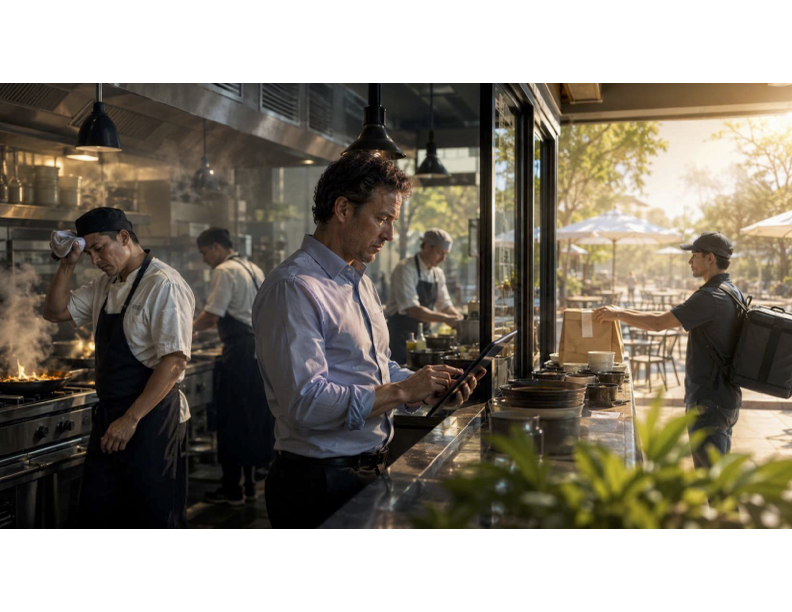
As record-breaking temperatures continue to affect communities across many regions, the restaurant industry is facing a unique set of operational and economic challenges. While summer has traditionally been a strong season for hospitality, prolonged periods of extreme heat are changing customer behavior, increasing operating costs, and placing additional strain on restaurant staff.
For restaurant owners and operators, adapting to these conditions has become less about managing a seasonal inconvenience and more about building long-term resilience.
Changing Customer Behavior
Extreme heat significantly influences how and when people choose to dine out. During the hottest parts of the day, many consumers are opting to stay indoors, postpone restaurant visits, or order delivery instead of dining on-site. Restaurants that rely heavily on lunch traffic or outdoor seating are often seeing noticeable declines in customer volume during heatwaves. Industry reports have also shown that bookings and walk-in traffic can fall substantially during periods of excessive heat.
At the same time, businesses with strong takeout, delivery, and online ordering capabilities are often better positioned to maintain sales by meeting customers where they are.
Rising Operating Costs
Keeping guests comfortable comes at a price. Air conditioning systems must work harder and longer, increasing electricity consumption and utility expenses. Refrigeration equipment also operates under greater strain, while food storage temperatures require closer monitoring to maintain food safety standards.
These additional costs arrive at a time when many operators are already managing higher food prices, labor expenses, and ongoing inflationary pressures. Restaurant industry research continues to identify rising operating costs as one of the sector's biggest profitability challenges.
Protecting Restaurant Staff
Perhaps the greatest concern during a heatwave is employee well-being.
Kitchen environments regularly operate at temperatures well above those experienced by guests in the dining room. Combined with grills, fryers, ovens, and long shifts, excessive outdoor temperatures can create physically demanding working conditions. Restaurant employees frequently report fatigue, dehydration, and heat stress during prolonged hot weather, prompting many operators to introduce more frequent hydration breaks, cooling stations, and schedule adjustments.
Investing in staff comfort isn't simply an employee benefit—it's an operational necessity that supports productivity, morale, and workplace safety.
Outdoor Dining Isn't Always an Advantage
Outdoor patios have become valuable revenue generators for many restaurants, but extreme heat can quickly reduce their appeal. When temperatures climb into dangerous territory, guests often prefer climate-controlled indoor spaces or choose not to dine out at all.
Some operators are responding by installing additional shade structures, misting systems, portable fans, and adjusting service hours to emphasize evening dining when temperatures become more comfortable.
Opportunities to Adapt
Despite the challenges, many restaurants are finding creative ways to respond.
Successful operators are:
- Promoting refreshing seasonal menus featuring lighter dishes and cold beverages.
- Expanding delivery and curbside pickup services.
- Shifting marketing toward evening dining experiences.
- Training staff on heat-related safety practices.
- Investing in energy-efficient cooling equipment and preventative maintenance.
- Monitoring inventory carefully to reduce spoilage during periods of peak refrigeration demand.
Restaurants that remain flexible can often offset some of the revenue fluctuations associated with extreme weather.
Looking Ahead
Climate experts expect heatwaves to become more frequent and more intense in many parts of the world, making heat resilience an increasingly important part of restaurant operations. While extreme temperatures create immediate challenges—from reduced foot traffic to higher utility bills—they also encourage innovation in service models, menu planning, staffing, and facility design.
The restaurants that adapt proactively will be better equipped to protect their employees, serve their guests, and maintain profitability in an increasingly unpredictable climate. As the hospitality industry evolves, resilience may become just as important as exceptional food and service.