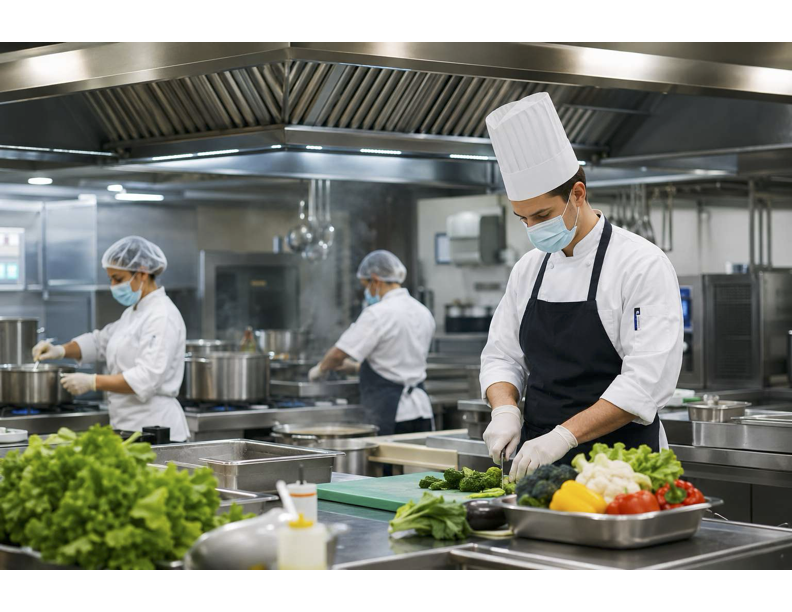
Food safety is one of the most important responsibilities in any commercial kitchen. Whether serving a handful of customers or thousands of meals each day, maintaining a safe food preparation environment protects customers, employees, and the reputation of the business.
While proper food handling and employee training are essential, the kitchen's ventilation and exhaust systems also play a significant role in creating a safe and sanitary workplace.
Why Food Safety Matters
Foodborne illnesses affect millions of people every year. Even a single incident can result in customer illness, health department violations, financial losses, and long-term damage to a restaurant's reputation.
Maintaining high food safety standards helps businesses:
- Protect customers from foodborne illnesses.
- Meet local and federal health regulations.
- Reduce cross-contamination risks.
- Improve employee confidence and accountability.
- Preserve the quality and consistency of every meal.
Clean Air Is Part of Food Safety
Commercial kitchens generate grease, smoke, heat, steam, and airborne contaminants throughout the cooking process. Without an effective ventilation system, these contaminants can accumulate on surfaces, equipment, and ceilings, creating sanitation challenges and increasing fire hazards.
A properly designed kitchen ventilation system helps by:
- Removing grease-laden vapors before they settle.
- Controlling smoke and excessive heat.
- Improving indoor air quality for employees.
- Reducing moisture that can contribute to mold growth.
- Supporting a cleaner and more comfortable work environment.
Preventive Maintenance Is Essential
Installing quality equipment is only the beginning. Routine maintenance is critical to keeping kitchen systems operating efficiently.
Regular inspections should include:
- Cleaning hood filters.
- Inspecting exhaust fans.
- Checking makeup air systems.
- Verifying airflow performance.
- Ensuring ductwork remains free of excessive grease buildup.
Preventive maintenance not only supports food safety but also extends equipment life, reduces energy costs, and minimizes unexpected downtime.
Employee Training Makes the Difference
Even the best equipment cannot replace proper employee practices. Every kitchen team should receive ongoing training covering:
- Proper handwashing procedures.
- Safe food storage temperatures.
- Prevention of cross-contamination.
- Cleaning and sanitizing schedules.
- Equipment operation and maintenance awareness.
Creating a culture where every employee understands the importance of food safety leads to more consistent operations and better customer experiences.
Compliance Protects Your Business
Health inspections are designed to verify that commercial kitchens meet established safety standards. Staying proactive with sanitation, ventilation maintenance, and employee training helps businesses remain compliant while avoiding costly violations or operational interruptions.
Rather than preparing only when an inspection is scheduled, successful operators make food safety part of their daily routine.
Final Thoughts
Food safety extends far beyond food preparation. It involves every aspect of the commercial kitchen—from employee habits and sanitation procedures to ventilation systems and preventive maintenance.
Investing in clean, efficient kitchen environments not only protects customers but also improves employee comfort, extends equipment life, and strengthens the long-term success of the business.
At Hood Depot, we understand that reliable commercial kitchen ventilation is a key component of a safe, efficient, and compliant operation. By combining quality equipment with regular maintenance and industry expertise, commercial kitchens can create healthier environments where both employees and customers benefit.