Keeping Food Safe, Fresh, and Profitable
Refrigeration equipment is one of the most critical components of any commercial kitchen. From restaurants and hotels to schools, hospitals, and food service facilities, reliable refrigeration systems ensure food safety, maintain product quality, and support efficient kitchen operations.
As food costs continue to rise and health regulations become more stringent, investing in high-quality refrigeration equipment has become more important than ever.
Why Commercial Refrigeration Matters
Commercial refrigeration systems do much more than simply keep food cold. They play a vital role in:
- Maintaining safe food storage temperatures
- Reducing food spoilage and waste
- Preserving product freshness and flavor
- Meeting local health department requirements
- Improving operational efficiency
- Protecting inventory investments
Food products stored outside of recommended temperature ranges can quickly enter the "danger zone," where bacteria multiply rapidly. Proper refrigeration helps operators maintain compliance with food safety standards while protecting customers and their business reputation.
Types of Commercial Refrigeration Equipment
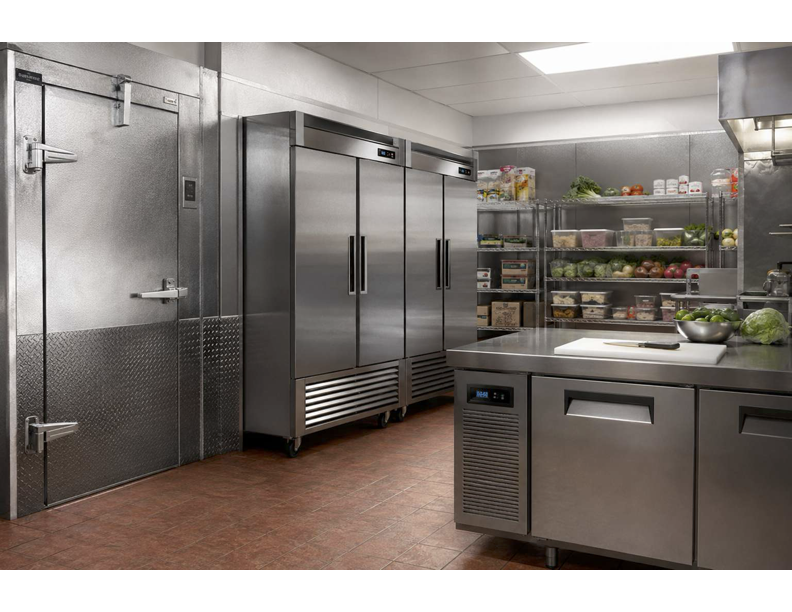
Modern commercial kitchens rely on several types of refrigeration equipment to support daily operations.
Walk-In Coolers and Freezers
Walk-in refrigeration systems provide large-capacity storage for perishable products. These units are ideal for high-volume operations that require substantial refrigerated or frozen inventory.
Benefits include:
- Increased storage capacity
- Improved inventory organization
- Enhanced temperature consistency
- Reduced food waste
Reach-In Refrigerators and Freezers
Reach-in units are among the most commonly used refrigeration solutions in commercial kitchens. Available in one, two, or three-door configurations, they provide convenient access to ingredients and prepared foods.
Prep Tables and Refrigerated Workstations
These units combine refrigerated storage with food preparation surfaces, allowing kitchen staff to work more efficiently while keeping ingredients within safe temperature ranges.
Common applications include:
- Pizza preparation
- Sandwich assembly
- Salad stations
- Cold food preparation
Undercounter Refrigeration
Undercounter refrigerators maximize available workspace by utilizing otherwise unused areas beneath counters. They are particularly valuable in kitchens where space is limited.
Energy Efficiency and Operating Costs
Refrigeration equipment typically operates 24 hours a day, making it one of the largest energy consumers in a commercial kitchen. Modern energy-efficient systems can significantly reduce utility costs while maintaining superior performance.
Features that improve efficiency include:
- High-efficiency compressors
- Electronically commutated (EC) fan motors
- LED lighting
- Improved insulation
- Smart temperature controls
- Self-closing doors
Selecting ENERGY STAR® certified refrigeration equipment can help operators reduce energy consumption and lower long-term operating expenses.
Preventive Maintenance Is Essential
Regular maintenance is critical to maximizing the lifespan and performance of refrigeration equipment. Neglected systems often experience increased energy consumption, inconsistent temperatures, and costly breakdowns.
Recommended maintenance practices include:
- Cleaning condenser coils regularly
- Inspecting door gaskets and seals
- Monitoring temperature performance
- Checking refrigerant levels
- Cleaning drain lines
- Scheduling professional inspections
A proactive maintenance program can help prevent unexpected downtime and expensive emergency repairs.
Choosing the Right Refrigeration Equipment
When selecting refrigeration equipment, operators should consider:
- Storage capacity requirements
- Available kitchen space
- Energy efficiency ratings
- Temperature requirements
- Ease of maintenance
- Future growth needs
- Compliance with local regulations
Working with experienced commercial kitchen professionals can help ensure the selected equipment matches the operational demands of the facility.
The Bottom Line
Commercial refrigeration equipment is a foundational investment that directly impacts food safety, product quality, energy consumption, and overall kitchen efficiency. By selecting reliable, energy-efficient systems and maintaining them properly, operators can protect their inventory, reduce operating costs, and ensure long-term success.
Whether outfitting a new facility or upgrading an existing kitchen, choosing the right refrigeration solution is an investment in both operational performance and customer satisfaction.