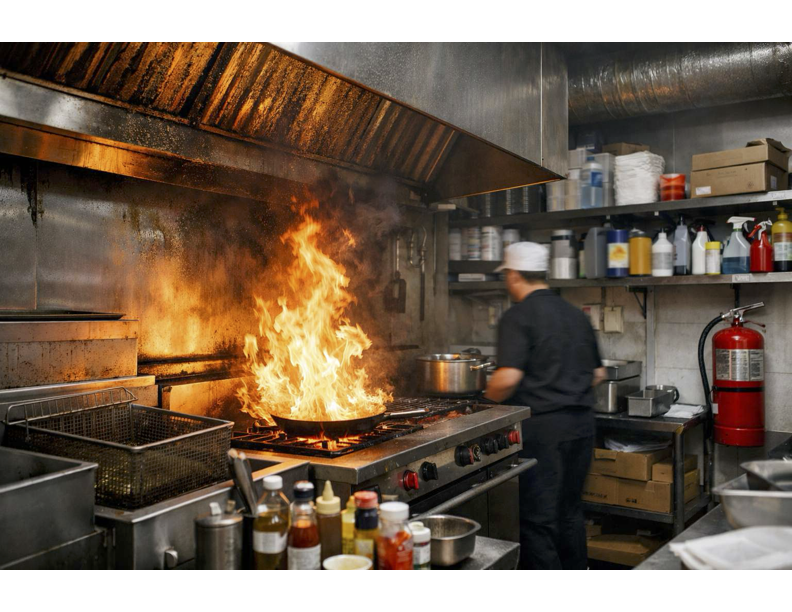
Walk into any busy commercial kitchen and you’ll see heat, motion, and pressure all happening at once. It’s what makes restaurants run. It’s also what makes them vulnerable to fires.
Kitchen fires are one of the leading causes of property damage in the food service industry. The good news is most of them are preventable. Understanding where the risks come from is the first step to avoiding them.
1. Grease Buildup
Grease is the number one culprit behind kitchen fires.
It builds up slowly in places people don’t always think about, like inside exhaust hoods, ducts, and on cooking surfaces. Over time, that buildup becomes highly flammable. One flare-up on the stove can ignite it instantly.
The danger isn’t just the initial flame. Once grease inside a ventilation system catches fire, it can spread fast and become very hard to control.
What helps:
-
Regular deep cleaning of hoods and ducts
-
Daily cleaning of cooking surfaces
-
Professional inspections on a set schedule
2. Unattended Cooking
Commercial kitchens move fast, but leaving cooking equipment unattended is a major risk.
Oil overheats. Food burns. Flames can spread before anyone notices, especially during peak hours when staff are juggling multiple tasks.
Even a short distraction can turn into a serious problem.
What helps:
-
Clear policies about never leaving active cooking unattended
-
Assigning responsibility during busy shifts
-
Using timers and temperature controls
3. Faulty or Overworked Equipment
Kitchen equipment takes a beating. Fryers, ovens, and grills run for long hours, often at high temperatures.
When equipment isn’t maintained, small issues like worn wiring, faulty thermostats, or clogged gas lines can lead to fires.
Overloading electrical circuits is another common issue, especially in older kitchens.
What helps:
-
Routine maintenance and servicing
-
Replacing aging equipment before it fails
-
Avoiding overloaded outlets and extension cords
4. Poor Ventilation Systems
Ventilation systems are designed to remove heat, smoke, and grease-laden vapors. When they’re not working properly, those elements stay in the kitchen and increase fire risk.
Blocked or dirty ducts can also trap heat and fuel a fire if one starts.
What helps:
-
Keeping vents and filters clean
-
Making sure exhaust systems are functioning properly
-
Scheduling regular professional cleanings
5. Open Flames and High Heat
Commercial kitchens rely heavily on open flames, from gas burners to charbroilers.
High heat is necessary for cooking, but it also creates the perfect environment for fires if something goes wrong. Flammable items like towels, paper products, or packaging materials can ignite quickly if placed too close to heat sources.
What helps:
-
Keeping flammable materials away from cooking areas
-
Training staff on safe handling of open flames
-
Using flame-resistant materials where possible
6. Improper Storage of Flammable Materials
Cooking oils, cleaning chemicals, and even certain food packaging materials can all contribute to fire risk if stored incorrectly.
When these items are placed near heat sources or in cluttered spaces, they can ignite or accelerate a fire.
What helps:
-
Storing oils and chemicals in designated areas
-
Keeping storage spaces organized and uncluttered
-
Following safety guidelines for all materials
7. Lack of Staff Training
Even with the best equipment and systems, people play the biggest role in fire prevention.
If staff don’t know how to handle a grease fire, use a fire extinguisher, or respond quickly in an emergency, a small incident can escalate.
What helps:
-
Regular fire safety training
-
Clear emergency procedures
-
Easy access to fire extinguishers and suppression systems
Final Thoughts
Commercial kitchen fires rarely come out of nowhere. Most are the result of small, preventable issues that build up over time.
A missed cleaning. A distracted moment. A piece of equipment that should have been serviced weeks ago.
The difference between a close call and a major loss often comes down to preparation and consistency. When safety becomes part of the daily routine, the risk drops significantly.
If you run or manage a kitchen, it’s worth taking a step back and asking a simple question: Where are we most at risk right now?
That answer is where prevention should start.