Running a commercial kitchen without proper ventilation is like trying to cook in a sealed box. Heat builds up, grease lingers in the air, and before long you’re dealing with safety risks, unhappy staff, and potential code violations. A good ventilation system isn’t just a nice-to-have. It’s one of the most important parts of a functional kitchen.
Here’s a clear look at what commercial kitchen ventilation systems do, why they matter, and what to consider when setting one up.
What Is a Commercial Kitchen Ventilation System?
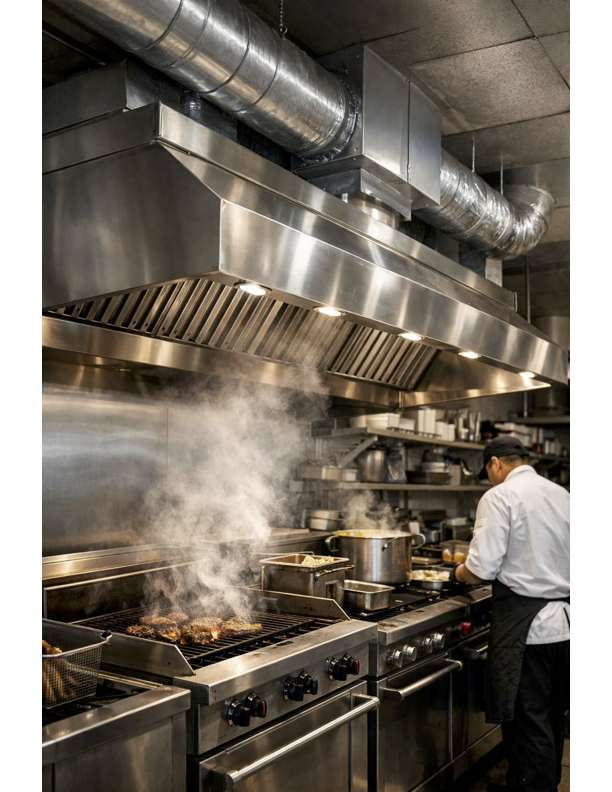
At its core, a commercial kitchen ventilation system removes heat, smoke, grease, and odors from the air. It replaces that air with clean, fresh air so the kitchen stays safe and comfortable.
A typical system includes:
-
Range hood (or exhaust hood): Captures heat, grease, and smoke at the source
-
Ductwork: Moves contaminated air out of the building
-
Exhaust fan: Pulls air through the system and expels it outside
-
Makeup air system: Brings fresh air back in to replace what’s removed
Everything works together. If one part is off, the whole system struggles.
Why Ventilation Matters More Than You Think
A lot of people assume ventilation is just about comfort. It’s not. It directly affects safety, compliance, and even food quality.
1. Fire Safety
Grease particles in the air can build up inside ducts and hoods. Without proper ventilation and cleaning, that buildup becomes a serious fire hazard.
Most fire codes require commercial kitchens to have certified ventilation systems for this reason.
2. Air Quality and Staff Health
Cooking releases smoke, steam, and gases. Without proper airflow, staff end up breathing that in for hours.
Poor ventilation can lead to:
-
Eye and throat irritation
-
Fatigue
-
Long-term respiratory issues
A well-designed system keeps the air clean and easier to work in during long shifts.
3. Temperature Control
Kitchens get hot fast. Without ventilation, that heat just sits there.
Good airflow helps:
-
Keep temperatures manageable
-
Reduce strain on HVAC systems
-
Improve staff productivity
4. Odor Management
Strong food smells can drift into dining areas or even outside the building. Ventilation systems help control where those odors go and how intense they are.
Types of Commercial Kitchen Hoods
Not all kitchens need the same setup. The type of hood depends on what you’re cooking.
Type I Hoods (Grease Hoods)
These are used for cooking that produces grease and smoke, like:
-
Frying
-
Grilling
-
Broiling
They include grease filters and are required in most full-service kitchens.
Type II Hoods (Condensate Hoods)
These handle heat and steam, but not grease. You’ll see them over:
-
Dishwashers
-
Ovens without grease output
-
Steam equipment
They’re simpler but still important for moisture control.
Makeup Air: The Part People Forget
One of the biggest mistakes in kitchen design is ignoring makeup air.
When a system pulls air out, that air has to be replaced. If it’s not:
-
Doors become hard to open
-
Air gets pulled in from unwanted places (like restrooms or outdoors)
-
The exhaust system becomes less effective
A balanced system keeps airflow steady and predictable.
Key Design Considerations
If you’re setting up or upgrading a system, a few decisions make a big difference.
Proper Sizing
Too small, and it won’t capture enough contaminants.
Too large, and you waste energy and money.
Sizing depends on:
-
Equipment type
-
Cooking volume
-
Kitchen layout
Energy Efficiency
Modern systems can include:
-
Variable speed fans
-
Demand-controlled ventilation
-
Heat recovery systems
These reduce operating costs without sacrificing performance.
Noise Levels
High-powered fans can get loud. This matters more than people expect, especially in open kitchen concepts.
Maintenance Access
Filters, ducts, and fans need regular cleaning. If the system is hard to access, maintenance gets skipped, and problems build up.
Maintenance: Where Most Problems Start
Even the best system fails without proper upkeep.
Regular maintenance should include:
-
Cleaning grease filters (often weekly or monthly)
-
Inspecting ductwork for buildup
-
Checking fan performance
-
Professional deep cleaning on a scheduled basis
Skipping maintenance doesn’t just reduce efficiency. It can lead to fines or shutdowns.
Final Thoughts
A commercial kitchen ventilation system isn’t just another piece of equipment. It’s what keeps the entire kitchen running safely and smoothly.
If you get it right, you’ll notice:
-
Better working conditions
-
Lower energy costs
-
Fewer compliance issues
-
A safer environment overall
If you get it wrong, problems show up fast.
Whether you’re opening a new kitchen or upgrading an old one, it’s worth taking the time to design a system that actually fits your needs. It’s one of those investments that pays off every single day you’re in operation.