Walk into a busy commercial kitchen during service and you’ll hear the exhaust hood long before you notice it. What you may not notice is the air it’s pulling out of the room. That air has to be replaced somehow. That’s where make-up air comes in.
Make-up air isn’t a luxury or a technical afterthought. It’s a core part of a safe, efficient, and code-compliant kitchen ventilation system.
What Is Make-Up Air?
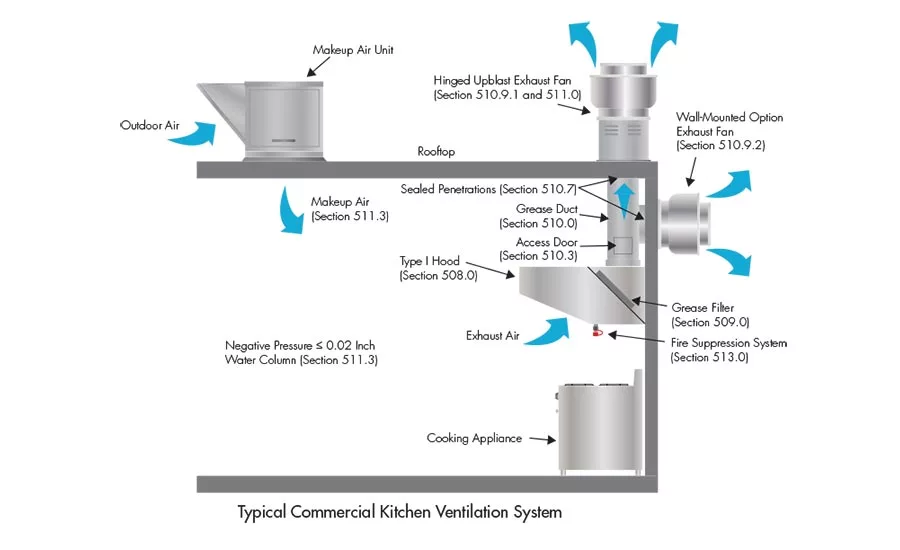
Make-up air is fresh air that’s intentionally brought into a building to replace air being exhausted. In a commercial kitchen, exhaust hoods remove large volumes of hot, greasy, and contaminated air. If that air isn’t replaced, the kitchen goes into negative pressure.
Negative pressure creates problems fast.
Doors become hard to open, pilot lights can blow out, combustion appliances may backdraft, and the HVAC system struggles to keep up. In extreme cases, fumes and carbon monoxide can be pulled back into the space.
Make-up air keeps the air balance steady so everything else can work as designed.
Why Commercial Kitchens Need It
Commercial kitchens exhaust a lot of air. A single hood can easily remove thousands of cubic feet of air per minute. That air doesn’t magically reappear.
Without make-up air:
-
Exhaust fans lose efficiency
-
Cooking smoke spills into the kitchen or dining area
-
Gas appliances don’t draft properly
-
Heating and cooling costs spike
-
Staff comfort drops, especially in hot weather
With properly designed make-up air:
-
The kitchen stays neutral or slightly negative
-
Exhaust hoods capture smoke and grease effectively
-
Equipment runs safer and more consistently
-
The space is more comfortable to work in
How Make-Up Air Is Delivered
Make-up air can be introduced in a few different ways, depending on the kitchen design and local codes.
1. Dedicated Make-Up Air Units (MAUs)
These are common in larger kitchens. A make-up air unit pulls in outdoor air, filters it, and may heat or cool it before supplying it to the space. This is the most controlled and predictable option.
2. Integrated HVAC Systems
In some buildings, the general HVAC system supplies part of the replacement air. This can work in smaller kitchens, but it requires careful coordination with the exhaust system.
3. Transfer Air
Air can be pulled from adjacent spaces like dining rooms or corridors. This approach is limited and usually only allowed when exhaust volumes are low.
Tempered vs Untempered Make-Up Air
One of the biggest design decisions is whether the make-up air is tempered.
-
Untempered air is cheaper to install but can make kitchens uncomfortable, especially in cold or hot climates.
-
Tempered air is heated or cooled to stay closer to room temperature. It costs more upfront but improves comfort, reduces complaints, and helps HVAC systems operate more efficiently.
In most full-service kitchens, tempered make-up air pays for itself over time.
Code and Compliance Considerations
Building and mechanical codes typically require make-up air once exhaust reaches a certain threshold. Many jurisdictions also specify how close the make-up air volume must match the exhaust volume.
Poorly balanced systems often fail inspections. Even worse, they pass inspection but cause daily operational headaches.
Working with an experienced mechanical engineer or kitchen ventilation specialist is critical. Guesswork here gets expensive.
Common Mistakes to Avoid
-
Undersizing the make-up air unit
-
Dumping cold air directly onto cooks
-
Failing to interlock make-up air with exhaust fans
-
Ignoring future equipment upgrades
-
Assuming “the building will leak enough air”
Commercial kitchens don’t leak enough air. Not safely, and not reliably.
The Bottom Line
Make-up air is not optional in a commercial kitchen. It’s the unseen half of the ventilation system that keeps exhaust hoods effective, equipment safe, and staff comfortable.
If your kitchen feels stuffy, doors slam shut, or smoke lingers longer than it should, the problem may not be the hood at all. It’s often the air coming in, or the lack of it.
Get the balance right, and everything else works better.