A commercial kitchen works hard. Heat, smoke, grease, and odors build up fast, and without the right ventilation system, they create safety risks, poor air quality, and code violations. A well-designed ventilation system does more than move air. It protects staff, improves efficiency, and keeps the kitchen compliant.
This post breaks down the key design and installation considerations for commercial kitchen ventilation systems, focusing on what actually matters in real-world kitchens.
Why Ventilation Matters in Commercial Kitchens
Commercial cooking produces more heat, grease, and combustion byproducts than any other space in a building. Without proper ventilation, these contaminants linger, making the kitchen uncomfortable and unsafe.
Good ventilation helps:
-
Remove smoke, grease vapors, and odors
-
Control heat and humidity
-
Reduce fire risk
-
Maintain indoor air quality
-
Meet health and building codes
A system that’s undersized or poorly installed will struggle from day one.
Understanding Hood Types and Their Uses
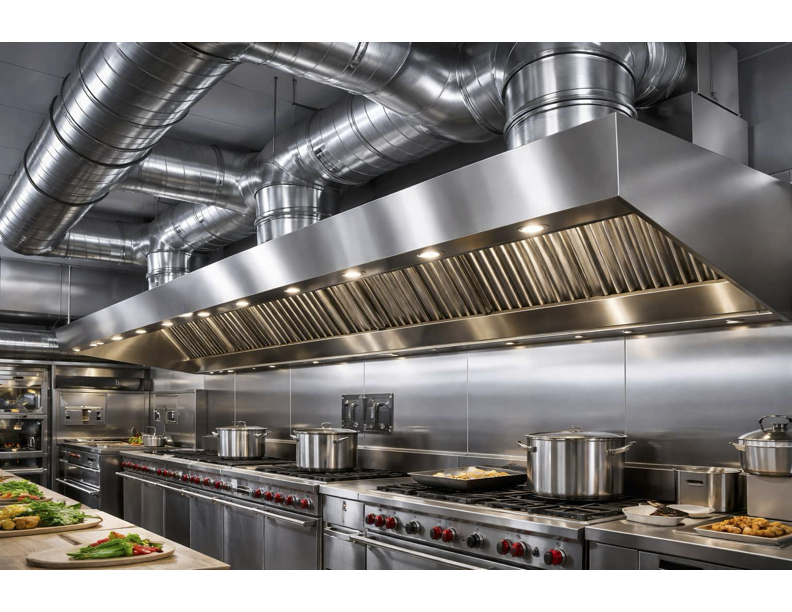
The kitchen hood is the most visible part of the ventilation system, but choosing the wrong type is a common mistake.
Type I hoods are required for grease-producing appliances like fryers, grills, ranges, and charbroilers. They are designed to capture grease-laden vapors and must be paired with fire suppression systems.
Type II hoods handle heat and steam from equipment such as dishwashers, pizza ovens, and steamers where grease is not a concern.
Selecting the correct hood depends on the equipment underneath it, not just the size of the cooking line.
Proper Hood Sizing and Placement
Hood size and placement directly affect how well the system captures contaminants.
A hood should:
-
Extend beyond the cooking equipment on all open sides
-
Be mounted at the correct height above appliances
-
Match the cooking load and appliance output
A hood that’s too small or mounted too high allows smoke and grease to escape into the kitchen, forcing the exhaust fan to work harder with worse results.
Airflow and Exhaust Rates
Airflow is measured in cubic feet per minute (CFM), and getting this number right is critical.
Too little airflow leads to poor capture and lingering smoke. Too much airflow wastes energy, increases noise, and pulls conditioned air out of the building.
CFM requirements depend on:
-
Appliance type and heat output
-
Hood style
-
Cooking intensity
An experienced designer will calculate exhaust rates based on actual equipment, not rough estimates.
Makeup Air Balance
Every cubic foot of air exhausted must be replaced. This is where makeup air comes in.
Without adequate makeup air:
-
Doors become hard to open
-
HVAC systems struggle
-
The kitchen becomes uncomfortable
-
Exhaust performance drops
Makeup air systems should be designed to replace air gently without creating drafts over cooking surfaces. In colder climates, tempering or heating makeup air is often necessary.
Ductwork Design and Materials
Ductwork carries grease-laden air from the hood to the exhaust fan, and poor duct design creates long-term problems.
Key considerations include:
-
Smooth, welded steel ducts for grease exhaust
-
Minimal turns to reduce grease buildup
-
Proper slope for grease drainage
-
Access panels for cleaning
Grease accumulation in ducts is a serious fire hazard. Good design makes regular cleaning easier and more effective.
Fire Safety and Code Compliance
Commercial kitchen ventilation is heavily regulated, and for good reason.
Systems must comply with:
-
Local building codes
-
Fire codes
-
Mechanical codes
-
Health department requirements
This includes fire suppression systems, clearance requirements, and proper exhaust termination. Cutting corners here can delay openings, cause failed inspections, or lead to shutdowns later.
Installation Quality Matters
Even a well-designed system can fail if it’s installed poorly.
Common installation issues include:
-
Incorrect hood height
-
Improper duct sealing
-
Misaligned exhaust fans
-
Inadequate makeup air integration
Installation should be handled by qualified professionals familiar with commercial kitchen environments. Coordination between HVAC, electrical, and fire suppression teams is essential.
Planning for Maintenance
Ventilation systems require regular cleaning and maintenance, especially grease exhaust systems.
Design should account for:
-
Easy access to filters and ducts
-
Durable components that withstand heat and grease
-
Clear service pathways
Planning for maintenance upfront reduces downtime and extends system life.
Final Thoughts
Commercial kitchen ventilation is not a place to guess or cut costs. The right design and installation protect people, equipment, and the business itself.
By focusing on proper hood selection, airflow balance, duct design, and code compliance, you create a system that works reliably under pressure. When done right, ventilation fades into the background and lets the kitchen do what it’s meant to do: cook safely, efficiently, and at full speed.