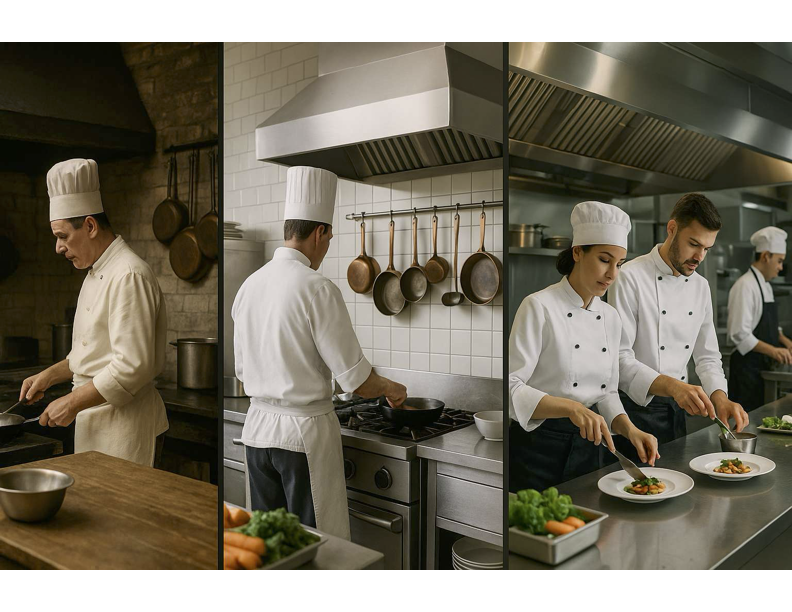
Commercial kitchens have always been the beating heart of restaurants. They are the place where ideas turn into dishes and dishes turn into revenue. But the kitchen of today looks nothing like the tight, smoky, crowded rooms that defined foodservice a century ago. The industry has been reshaped by new techniques, fresh technology, changing customer expectations, and a constant push for efficiency.
Here is how commercial kitchens evolved into the high-performance spaces we know now.
From Open Fires to Organized Workflows
Early commercial cooking spaces were chaotic. Open fires, limited tools, and cramped layouts made consistency tough. The turning point came when French chef Auguste Escoffier introduced the brigade system in the late 1800s. His approach assigned each cook a specialized station. Suddenly kitchens were organized, predictable, and scalable. The system still anchors many restaurants today.
The Rise of Industrial Equipment
The industrial revolution brought gas stoves, standardized cookware, and better ventilation. These upgrades did more than speed up cooking. They made kitchens safer and allowed restaurants to grow. By the mid-20th century, walk-in coolers, commercial mixers, and stainless steel prep surfaces became the norm. Kitchens could now handle higher volumes without sacrificing quality.
Health Codes Reshape the Space
As regulations increased during the 1900s, kitchen design changed. Smooth, easy-to-clean surfaces replaced porous materials. Handwashing stations multiplied. Food storage zones became more defined. These shifts helped reduce contamination and turned safety into a daily discipline rather than an afterthought.
Efficiency Becomes King
Fast food chains in the 1950s and 60s pushed kitchen efficiency to new levels. Assembly line layouts, standardized recipes, and batch prep strategies were engineered for speed and consistency. This thinking spread across the industry. Even independent restaurants began designing kitchens around workflow instead of aesthetics.
Technology Takes Over
Today’s commercial kitchen is a blend of hardware and software.
Smart ovens track internal temperatures and adjust settings on their own. Sensors monitor refrigeration and alert staff before equipment fails. Tablet-based expediting systems keep orders moving without shouting across the line. Some kitchens even use AI forecasting to plan prep based on expected foot traffic.
These tools reduce waste, cut labor costs, and keep service running smoothly.
The Sustainability Shift
Modern kitchens face new pressure to operate responsibly. Energy efficient appliances, low-flow dishwashers, induction cooktops, and composting programs are becoming standard. Many restaurants redesign their kitchens to reduce heat loss and improve airflow, which lowers utility bills and keeps staff comfortable.
Ghost Kitchens and the Delivery Boom
The rise of delivery changed everything again. Ghost kitchens, built for speed and volume rather than dine-in presentation, have exploded. Without front-of-house needs, these kitchens can operate in smaller footprints and focus entirely on consistency. Multiple brands often run from a single space, a model made possible by digital ordering and streamlined prep systems.
What Comes Next
Commercial kitchens will keep evolving. Expect more automation, more data driven tools, and more modular layouts that can shift with demand. But one thing will stay the same. The kitchen will always be a place where skill, creativity, and logistics collide.