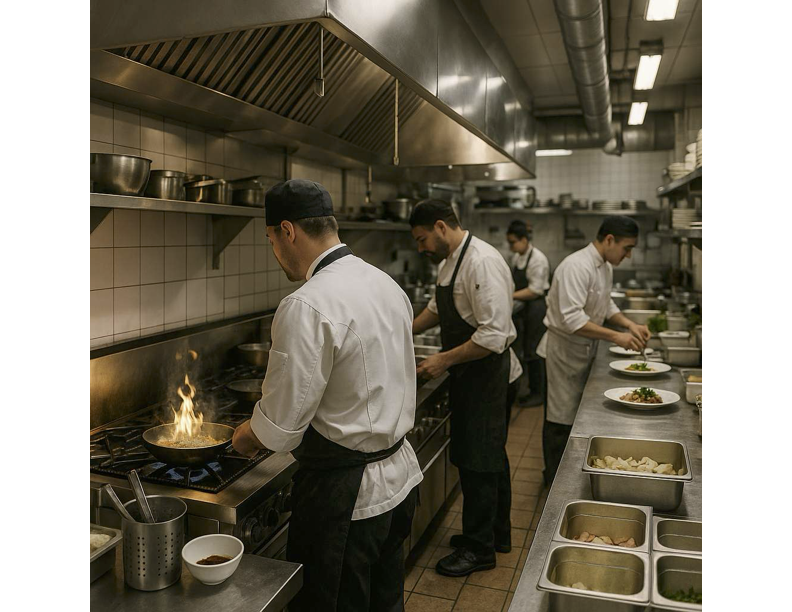
Running a commercial kitchen isn't just about turning out great food. It's also about running a tight ship where safety comes first. One slip—literally or figuratively—and you're looking at injuries, lawsuits, lost revenue, or worse. If you're managing a restaurant, catering business, or any food service operation, keeping your kitchen safe isn’t optional. It’s mission-critical.
Here’s what matters and how to handle it.
1. Knife Safety Isn’t Just for Rookies
A sharp knife is safer than a dull one—but only in trained hands. Teach your team proper cutting techniques. Make sure everyone knows how to carry knives (point down, blade back) and where to store them (not tossed in a sink). Use color-coded boards and always keep cutting stations clean and dry.
2. Clean Floors = Safe Floors
Slips and falls are the #1 cause of injuries in kitchens. Mop spills immediately, keep mats flat and clean, and never block walkways with boxes or trash. Make non-slip shoes mandatory. Post clear “Wet Floor” signs, even if it’s just for a minute.
3. Fire Hazards Are Real
Grease fires can gut a kitchen in seconds. Clean hoods, filters, and ducts regularly. Train staff on how to use fire extinguishers (not all fires can be handled the same way—know the difference between A, B, and K types). Install and maintain an automatic suppression system over cooking lines. Never stack flammable items near hot equipment.
4. Prep Stations Need Clear Rules
Cross-contamination is a silent killer, especially with raw meat and allergens. Use separate utensils and cutting boards for different foods. Label everything clearly. Make handwashing non-negotiable before and after handling food.
5. Refrigeration Checks: No Guesswork
Food poisoning is a reputation killer. Monitor and log fridge and freezer temps daily. Don't let anything fall into the "danger zone" (40°F–140°F / 4°C–60°C). Rotate stock using FIFO (First In, First Out) and ditch expired or questionable items without hesitation.
6. Training Is Everything
Don’t assume people know what to do. Have clear protocols and run regular safety drills—fire, first aid, evacuation. New hires should get full safety training from day one. No exceptions.
7. Gear & PPE Matter
Oven mitts, cut-resistant gloves, eye protection for chemical use—provide them and make sure they’re used. Skimping on gear is asking for an accident.
8. Document Everything
Log your cleanings. Log your inspections. Log your training. When something goes wrong (and at some point, something will), documentation shows you took safety seriously and followed protocol.
Bottom line: A safe kitchen runs smoother, faster, and with fewer surprises. It protects your team, your business, and your bottom line. Don’t wait until an accident forces change—build safety into your culture from the start.